APM:Unify Data and Decisions with a Platform-Based Approach
Agentic performance management is an innovative approach that connects not only horizontally across functions but vertically from BI to executives.
By transitioning performance management from expensive and specialized CPM tools into an organization-wide platform in Microsoft Fabric, APM enables FP&A and Biz Ops teams to get closer to the data than ever and deliver insights and results faster.
APM is not a singular tool but a mindset, delivery playbook, and technology toolkit that can be tailored to your specific needs - speed, scalability, cost savings, or all of the above. The techology options are all free to try with no long-term contracts or time-consuming sales processes.
In addition to covering all traditional knowledge-sharing methods, APM is also perfectly positioned for an AI-driven future with the ability to interact directly with LLMs for reporting, analytics, and building.
If you're looking to go beyond what tradiitonal CPM tools have to offer, APM is a proven alternative.
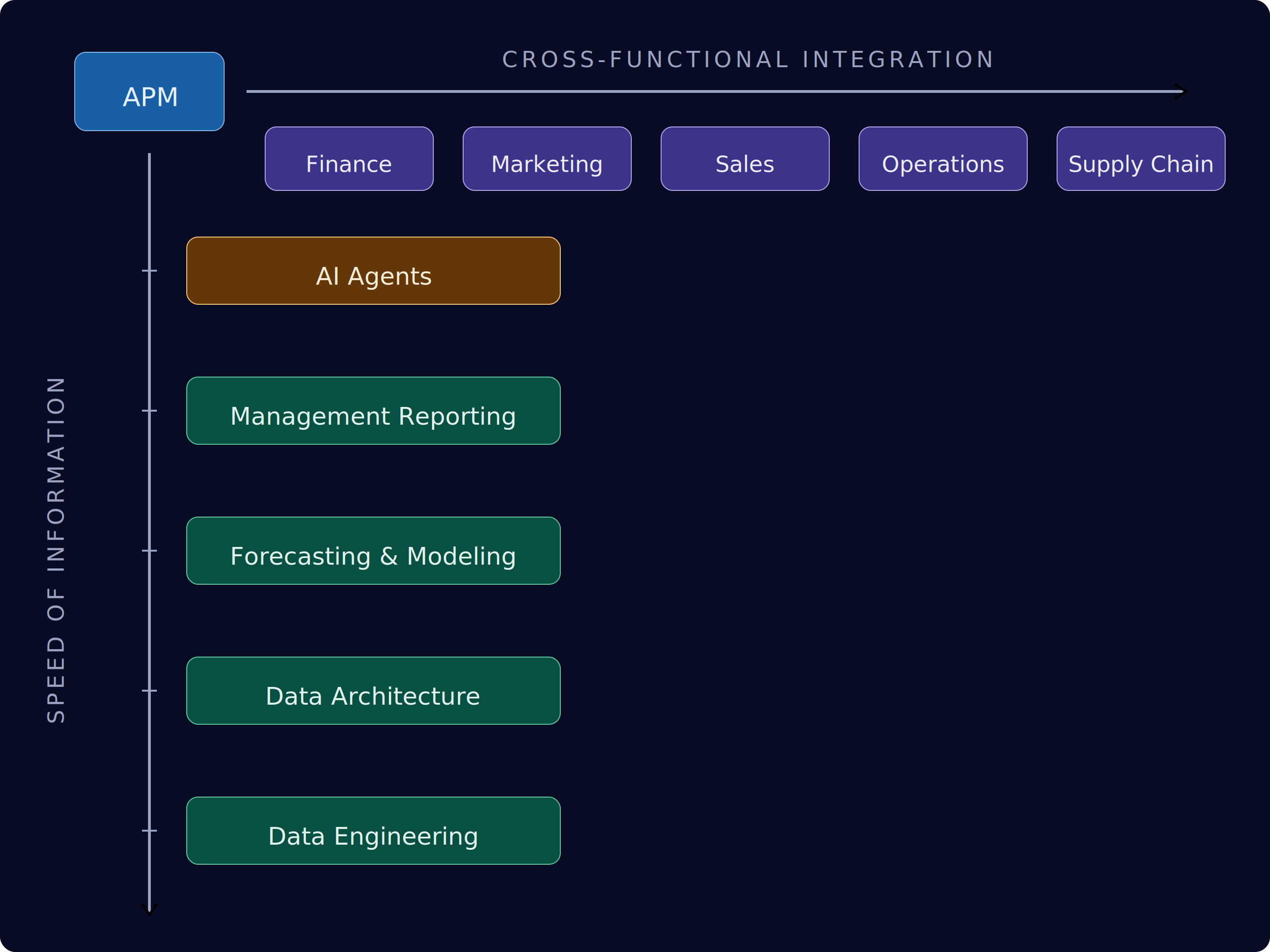
See APM in action:
The APM Toolkit
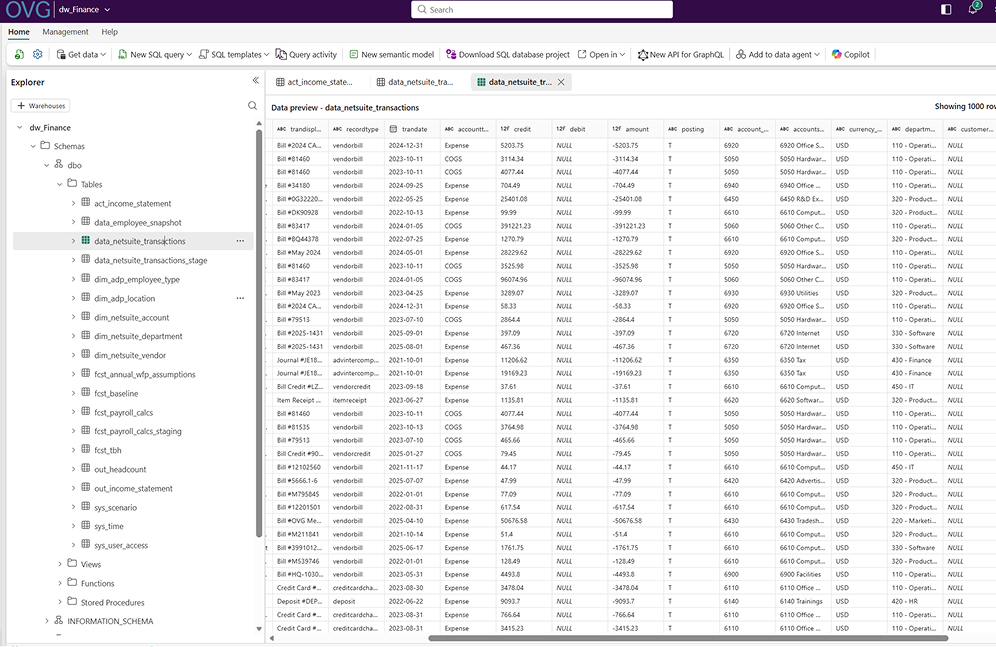
Combining familiar tools like Power BI, Power Query, Azure Data Factory, and Synapse, Fabric is the glue that helps to break down long-standing divides between technical and functional resources and brings decision-makers much closer to the data.
Fabric is an enterprise-grade data and analytics platform that can actually handle the full breadth of performance management data needs - structured and unstructured; real-time and periodic; quantitative and qualitative.
Finally, unlike most CPM offerings, Fabric is self-serve with a 60-day free trial and can be spun without existing IT infrastructure.
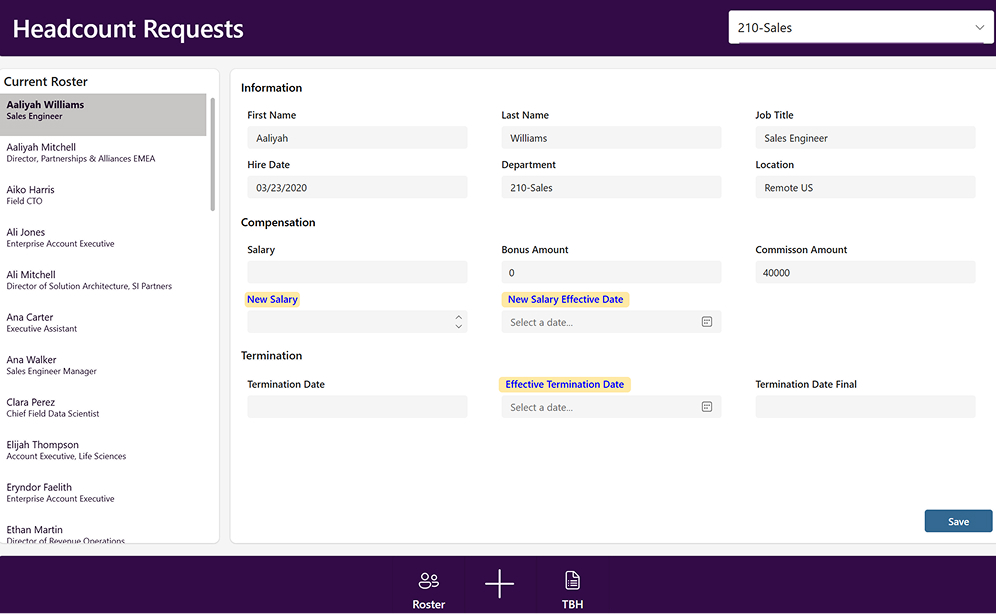
Power Platform apps can serve multiple purposes, including data collection, workflows, reporting, and AI agents. They are highly accessible on either web or mobile, and scale from a few users up to hundreds of users.
With the option to leverage templates or build from scratch, Power Platform is a critical ingredient for driving broad adoption across the business, with no compromises on features or design and perhaps most importantly, no new logins, just standard Microsoft authentication.
For more tech-savvy organizations, custom front-ends are also an option.
Finally, since Fabric is open and interoperable, non-Microsoft point solutions can also be easily connected, for example to automatically create requisitions in Greenhouse from hiring requests.
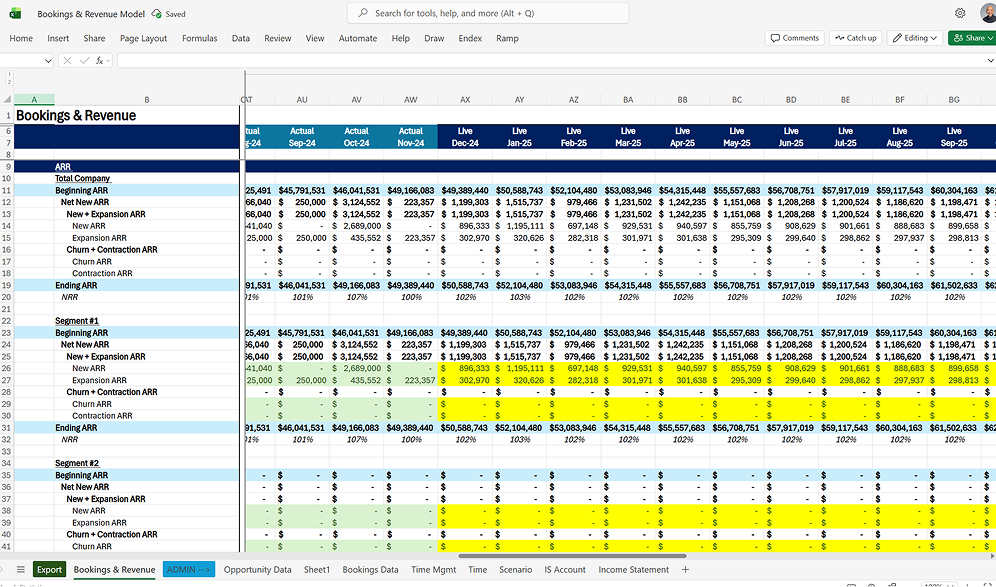
Excel is a key option, providing ultimate flexibility and usability while also scaling with native connections to Fabric, versioning coordinated via Power Apps, and automation via Power Automate, Office Scripts, and dynamic array formulas. Excel can effectively to the highest levels when used in conjunction with a platform.
For more sophisticated, high-volume, or consistent forecasting use cases such as workforce planning or demand forecasting, full-code models can be built in SQL or Python in Fabric and connected to ML models if needed. SQL and Python are much more accessible now with LLM-assisted coding.
Power Apps also play a role in modeling for areas like front-line sales forecasting which require constant updates from the field.
With options ranging from no-code to full-code, APM covers all the required modeling bases without forcing tradeoffs.
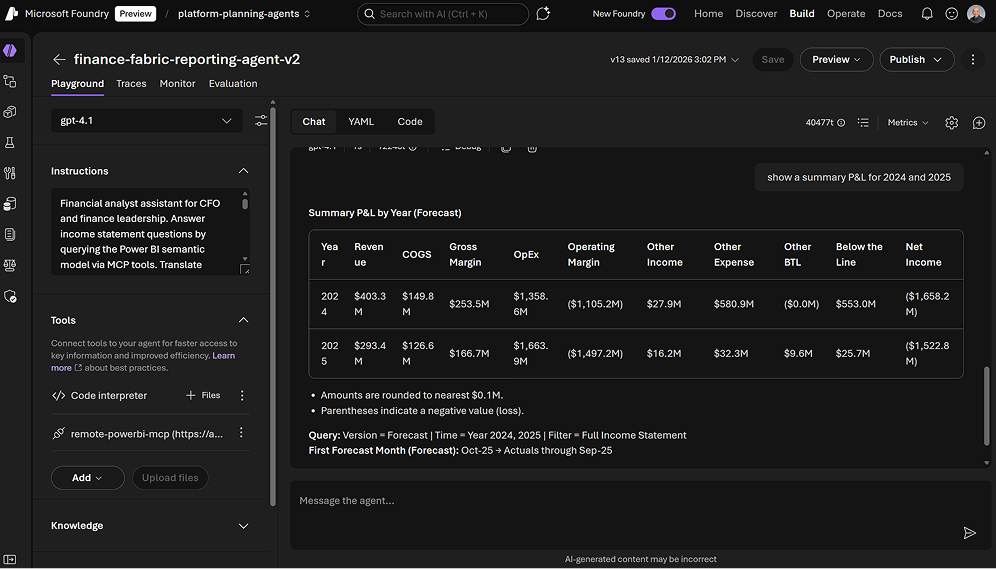
Microsoft has several agentic options, including Copilot Studio for simple informational use cases, Fabric Data Agents for querying structured data, Microsoft Foundry for sophisticated agents that can connect with various LLMs and delegate to agents for specific tasks,and powerful Anthropic tools like Cowork coming soon.
If the data foundation is designed and built well, agents can already deliver data and insights directly to decision-makers in natural language with little to no context provided.
As of December 2025, Microsoft released their Power BI MCP, which allows you to connect LLMs to Power BI semantic models, and the Fabric MCP is coming soon. The capabilities will continue to quickly improve from here.
Microsoft's agentic layer is especially compelling because Microsoft authentication and role-based access is passed natively to the agent, and it is publishable in familiar interfaces like Copilot, Teams, and Power Apps.
AI agents will soon be able to handle reporting, analysis, model-building, data manipulation, and more.APMis designed to realize the capabilities as soon as they materialize in a practical, low -risk, and cost-efficient manner.