The First Inning of the AI Endgame for Finance Teams


"This is the endgame."
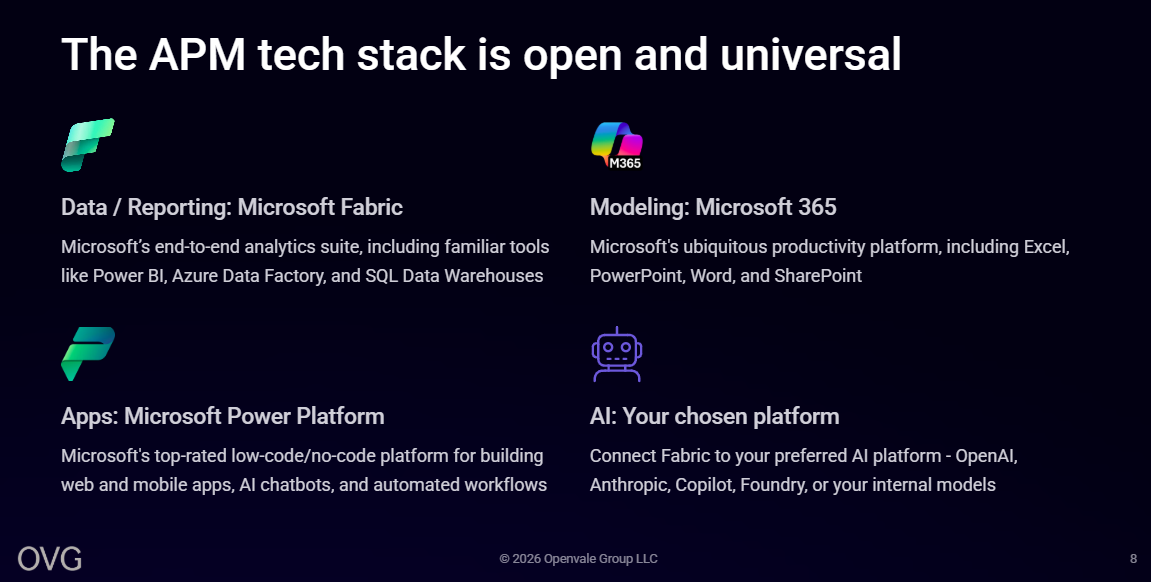
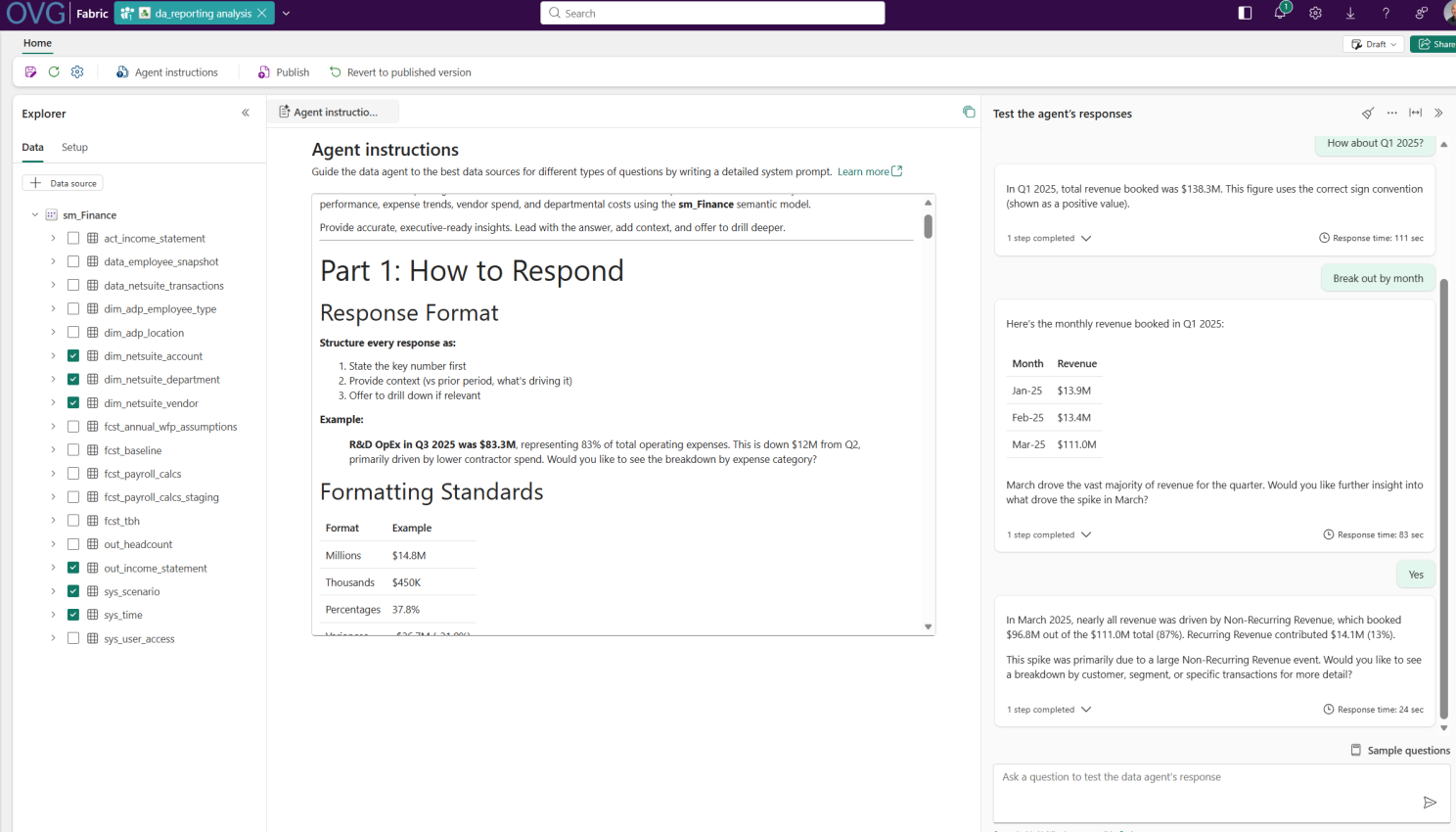
These were Erick Niu's words this week when I demonstrated how an AI agent can be built on top of Fabric and utilized for financial reporting.
With recent advancements, we are now in a world where enterprise data can be as accessible to an executive as holiday gift ideas are to ChatGPT users.
No specialized software or coding required. You own, build, and control your agent. All of your data stays within the Microsoft ecosystem and with role-based access controls throughout (HUGE challenge for custom built solutions).
While the end game is obvious, we are still in the first inning of implementation and value realization. Our goal at OVG along with finance leaders and partners like Erick is to help organizations get on-base and on the scoreboard as quickly as possible.
Building an agent is technically easy. You can point it to a data source, and it will work part of the time - far from acceptable for an executive. Following are what we see as the biggest keys to making agents work:
The right data foundation - AI agents will raise the bar even further on data management. Many organizations believe they have a gold-layer of business-ready data but in reality, there are countless spreadsheets, systems, and teams manipulating the data before it ever gets in front of a decision-maker. That's not really business-ready!
To make AI work, the data warehouse and semantic model themselves need to be built for executive needs, not data engineering needs. This will require operators to go deeper into data architecture than ever before to make sure that data is not only timely and accurate but also 'human-centric' for decision-makers.
The right instructions - AI agents aren't just systems or apps that you implement, they are entities that you train. Instructions need to be provided to them in the same way you would communicate to a new member of your team. You need to know where data resides, anticipate what stakeholders want, and understand how the agent will process information.
Thus, it's more of a managerial and communication challenge than a technical challenge to build a great agent. Again, operators with business context up to the highest levels must be involved, otherwise too much is lost in telephone games.
The right scope - the biggest upside of AI is also its biggest downside. You can do anything! Many are racing to boil the ocean instead of solving real problems. The addressable problem now is not replacing CFOs or one-shotting 3-statement models, it’s eliminating the need for the CFO to log into NetSuite or wait a day for an analyst to see revenue for the top 25 customers or expenses by the top 25 vendors. We're starting with consistently replacing reporting and then will move further into analysis (e.g., BvAs, trend analysis) and finally into more strategic thinking.
I would be lying if I said the speed of progression isn't daunting and a bit scary. The implications of these capabilities are vast and over the medium/long-term will permanently and drastically change the roles and responsibilities of analytical teams like FP&A. In manufacturing terms, effort is going to shift from frontline assembly to management, machine/product design, and quality control. If embraced, these shifts should ultimately represent a positive shift to more engaging and higher-value work for Finance teams.